
The difference between ABS and PVC doors It is in the type of material and their resistance to moisture and impact. ABS doors with anti-moisture coating and resistant structure are a suitable option for wet spaces such as toilets and bathrooms, while PVC doors with a smooth surface and lighter weight are used for more economical indoor spaces. In this regard, Waterproof door Rasta Choob offer performance beyond the standard by utilizing the combination of modern technology, high-quality raw materials and modern design. Rasta Choob, as a specialized manufacturer of all kinds of internal and waterproof doors, always tries to supply durable, beautiful products that suit the needs of customers to turn any space into an attractive and lasting environment.
- The difference between ABS and PVC doors — a practical guide to choosing the right door
- Materials and production process
- Resistance, durability and maintenance
- Appearance, design and color options
- Sound and thermal insulation, weight and installation
- Price, maintenance cost and long term value
- Practical suggestion and comparison table
- The ultimate decision guide for choosing between ABS and PVC doors
The decision to choose between ABS and PVC doors can have a direct impact on durability, final cost and environmental aesthetics; The wrong choice may lead to premature replacement, higher maintenance costs and visual dissatisfaction. If you are searching forThe difference between ABS and PVC doors", this article directly and practically answers your question and introduces the criteria that you should consider when buying or ordering.
Next, we'll help you understand the key differences by looking at materials and manufacturing methods, shock and moisture behavior, appearance and maintenance options, installation tips, and economic comparisons. It will also provide practical examples and recommendations for different spaces—from bathrooms and kitchens to high-traffic residential and commercial spaces—to simplify decision-making. If you are a contractor, buyer, or project manager, reading this guide will enable you to properly assess life cycle cost and design priorities. To reach a choice that is both beautiful and economical, join us to examine the advantages, disadvantages and suitable scenarios for each type of door step by step.
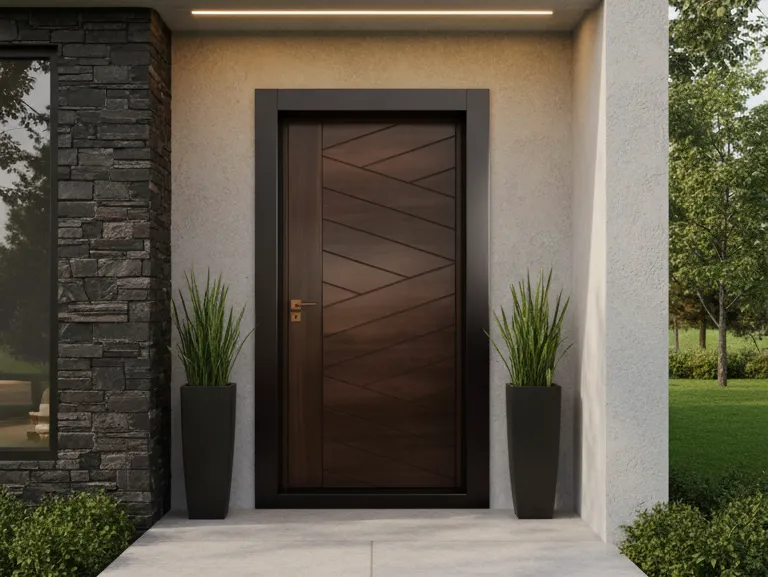
The difference between ABS and PVC doors — a practical guide to choosing the right door
answer to the questionThe difference between ABS and PVC doors» It requires examining the technical, aesthetic and economic aspects so that you can make an informed decision among the options. Focusing on material properties, durability, cost, and design installation tips, this article provides practical examples and implementation tips for building buyers and contractors.
Materials and production process
ABS doors are made of ABS (acrylonitrile butadiene styrene) polymer, which has good mechanical properties such as impact resistance and flexibility; Usually, the core of these doors is made of MDF or compressed wooden core, and the ABS cover is placed on the surface by extrusion or heat pressing process. In contrast, PVC doors are usually made of PVC panels or vinyl veneers on MDF, chipboard or foam cores, and their production process includes cold or heat lamination and bonding of PVC layers. As a door manufacturer, Rasta Choob uses standard processes to join the veneer and core to prevent layers from separating over time.
Resistance, durability and maintenance
ABS performs better against impact and scratches than many PVC coatings and deforms less in controlled humidity conditions; This feature makes ABS doors a suitable option for environments where there is a possibility of impact or moderate mechanical pressure. On the other hand, PVC doors have the advantage of natural resistance to water and moisture, and in bathrooms and kitchens where direct contact with moisture occurs, they usually show higher durability. In terms of maintenance, ABS surfaces are easily cleaned with common detergents and require no special care, while PVC may be vulnerable to strong solvents and require regular cleaning to maintain white colors.
Appearance, design and color options
ABS doors have the ability to provide various textures, including matte, semi-matte and artificial wood texture, and it is possible to shape the edges and create frames seamlessly. This allows for modern and classic designs with detailed details. In contrast, PVC offers a wide range of colors and patterns and can be a more cost-effective option where a high gloss or shine is required. Manufacturers such as Rasta Choob offer ABS-coated models for residential spaces and PVC options for wet spaces or commercial projects to cover the spectrum of customer needs.
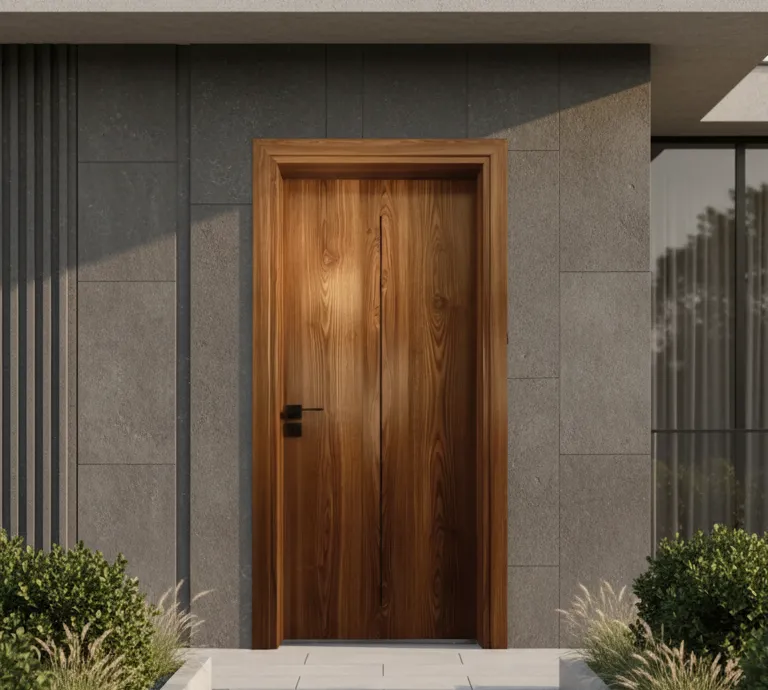
Sound and thermal insulation, weight and installation
The final weight of the door is a function of the core and the thickness of the coating; ABS-coated MDF cores tend to weigh more than lightweight PVC-coated foam panels, which can affect hinge performance and installation cost. From the point of view of sound and thermal insulation, doors with a dense core and ABS coating show a better performance in reducing sound and heat transmission due to their higher density.
For projects with high insulation requirements, it is recommended that the door core and fittings be carefully selected to achieve optimal performance. PVC door installation may be faster and less expensive, but in cases where the frame is asymmetrical or installation conditions are difficult, ABS doors offer a more accurate installation with precision cutting and shaping capabilities.
Price, maintenance cost and long term value
The initial cost of PVC doors is usually lower than ABS, making them attractive for projects with limited budgets. However, maintenance and lifetime costs should also be factored into the total cost calculation. ABS doors, which have a higher initial cost, may provide better economic value over time due to higher impact and scratch resistance and less need for replacement or repair.
The correct economic choice depends on the conditions of the installation site, the amount of traffic and contact with moisture; Consulting with manufacturers such as Rasta Choob can help determine the option with the lowest life cycle cost. Also, the price comparison based on the coating thickness, core quality and the warranty provided shows the real differences between the products.
Practical suggestion and comparison table
For the final selection, first specify the type of use (residential, commercial, sanitary), the amount of traffic and environmental conditions; For wet spaces and parts that have direct contact with water, PVC is recommended, and for high-traffic spaces that require a more high-quality appearance, ABS is more suitable. If you need to combine features, hybrid models with ABS coating and moisture-reinforced parts can be a mid-range and effective option. The table below summarizes the key differences to help you make a faster decision.
| Feature | ABS door | PVC door |
|---|---|---|
| Impact resistance | above; Suitable for high traffic areas | average; Suitable for low traffic spaces |
| Moisture resistance | Good, but depends on the quality of the coating connection | excellent; Suitable for bathroom and kitchen |
| Appearance and texture | Formable, variety of wooden and matte texture | High variety of colors, glossy and laminate can be selected |
| Weight and installation | More weight, need for stronger hinges | Lighter, faster installation |
| Initial price | medium to high | Low to medium |
| The choice should be made based on environmental needs and budget; Rasta Choob produces custom samples for both types. | ||
For special projects such as corporate units or hotels, it is necessary to request real samples and conduct field testing from the manufacturer; As a door manufacturer, Rasta Choob provides actual samples and installation advice to ensure final compliance with project requirements. In mass order, warranty review and after-sales service play a decisive role in the quality of the investment.

The ultimate decision guide for choosing between ABS and PVC doors
in the face ofThe difference between ABS and PVC doors» The best result is achieved when you weigh the technical, environmental and economic criteria at the same time: if you have a high-traffic space and need mechanical resistance and sound insulation, ABS doors are usually preferable; If moisture contact and low initial cost are priorities, a PVC door is a more practical option. The next specific steps to make a quick and confident decision are to check the humidity and traffic conditions of the site, determine the priority between beauty and life cycle cost, request a real sample and test the installation in the project conditions, and calculate the total cost of ownership including maintenance and replacement.
In hybrid projects, examining hybrid or enhanced samples can be a convenient shortcut. Also, make sure to select the core and fittings according to the weight and insulation requirements to ensure long-term performance. By adopting this practical approach, you will not only avoid sudden expenses but also optimize the beauty and efficiency of the space. Ultimately, making an informed choice between an ABS and PVC door means investing in comfort, durability and the visual identity of the space — a decision that will shape quality of life and costs for years to come.
How useful was this article?
1 --- 5
Average rating 4.9 / 5. Number of points 462
No points have been registered so far. (be the first)