
Do you want to build and install a Frameless door from scratch, but don't know where to start? This guide is based on experience Door production Frameless and principles Frameless door making tutorial Prepared, written for manufacturers and installers to provide you with step-by-step key steps, essential tools and safety tips in straightforward, practical language. In the following, you will learn how to select the correct thickness and type of glass, prepare and safely drill holes, select and install patchfit fittings, and finalize mechanisms to ensure both performance and durability of the system. .
- Frameless Door Construction Tutorial: A Practical Guide for Manufacturers and Installers
- Understanding the structure of Frameless and its technical advantages
- Materials and tools necessary for quality production
- Step-by-step steps to make the door Frameless
- Final installation and adjustment tips for long-term performance
- The role of Rasta Choob in the production, supply and support of Frameless doors
- Technical and aesthetic delivery of Frameless door: a way to install without worries
If you're looking for a practical reference for sourcing materials, securing standard fittings, and safety installation tips, pick one Frameless door manufacturer Authenticity is very important. In the meantime, Rasta Choob offers practical solutions for cutting, hardening, supply of standard fittings and post-installation support by using technical knowledge, up-to-date equipment and operational experience in the field of Frameless door production and installation. Rasta Choob workshop experience can simplify project execution and help you make more confident technical decisions and avoid common mistakes, from glass selection to final settings.
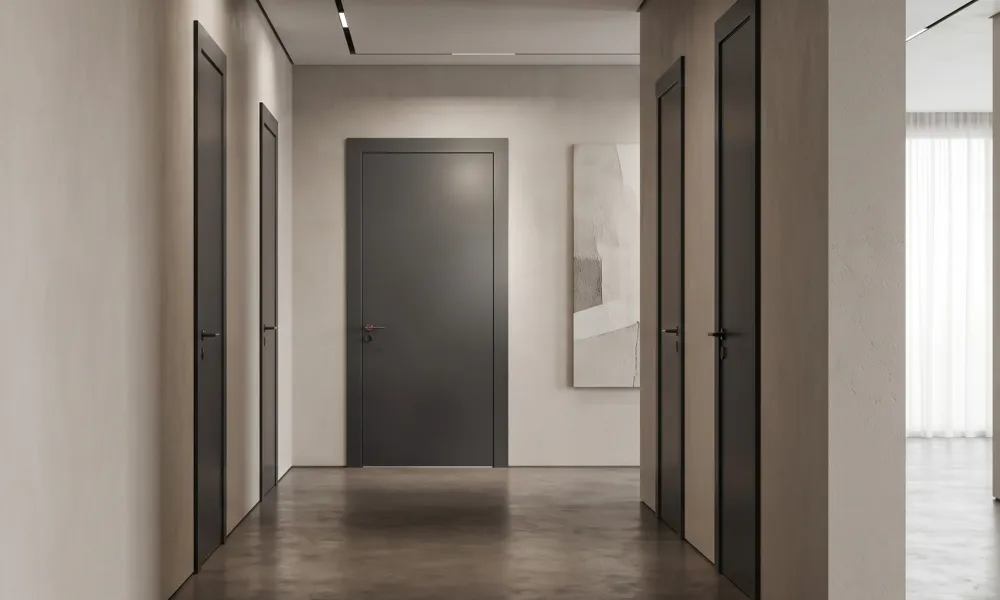
Frameless Door Construction Tutorial: A Practical Guide for Manufacturers and Installers
In this section of Frameless door making tutorialFirst, we get to know the exact definition and applications of this type of door to provide a practical basis for production and installation. Frameless doors are widely used in commercial, office and luxury residential spaces due to their minimal and glass appearance, and their difference with framed doors is the removal of metal profiles around the glass, which requires special attention in the selection of fittings and connections.
Engineered design to withstand load and impact, choosing the right tempered glass and using standard fittings are the key points of this type of door, which will be explained in technical details in the next step. It should be noted that Rasta Choob, as a manufacturer of all kinds of doors, has industrial experience and various portfolios in the production of Frameless doors, which can be a practical reference for novice manufacturers and clients of large projects.
Understanding the structure of Frameless and its technical advantages
The Frameless door is actually a set of toughened or laminated glass panels that run without a surrounding frame and mechanical connections such as patchfits, clamps and special hinges transfer the load directly to the glass. This structure causes the weight to be locally applied to the fittings; Therefore, it is necessary to analyze the stress in the drilling areas and the place where the fittings are installed.
The main advantages include increased natural light, continuous visual visibility, ease of cleaning and modern appearance, but possible disadvantages such as the need for high dimensional accuracy and higher cost of fittings should also be considered in the design. In urban and store projects where both visual beauty and safety of glass are important, choosing the right thickness of glass and the type of tempering is one of the crucial decisions.
Materials and tools necessary for quality production
The list of materials and tools specific to the Frameless door includes tempered glass with appropriate thickness (usually 10, 12, 15 mm depending on the height and use), patchfit fittings, hidden hinges or standard floor hinges, rubber gaskets for glass, suitable screws and dowels. It is for the holding frame, anti-corrosion pads and press equipment.
Key tools include a glass cutter, a drilling machine with special glass drills, a vacuum suction for safe handling, a digital level, a laser meter, and heavy-duty installation equipment such as a mini crane. The quality of fittings and the standard of glass production determine the useful life and performance of the door; Therefore, we recommend procuring items from reliable suppliers and performing quality control tests before installation.
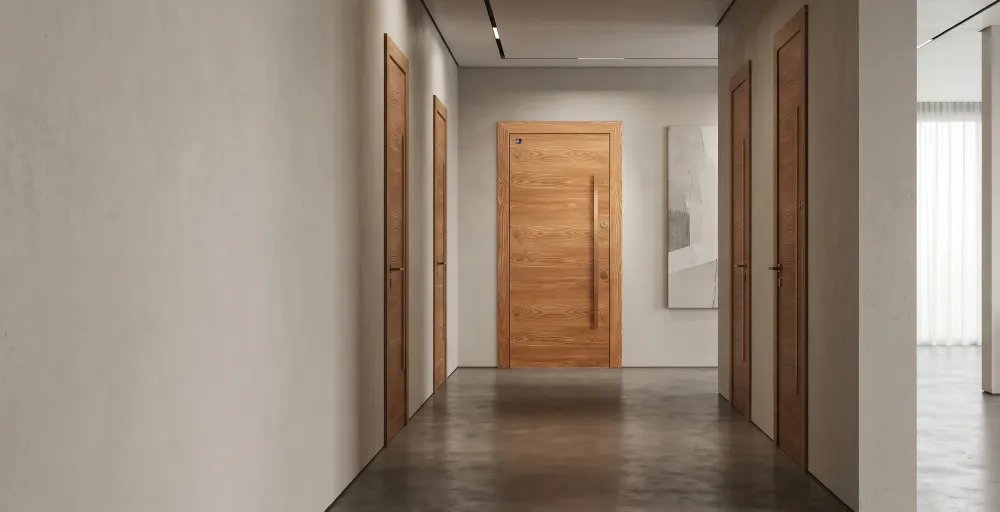
Step-by-step steps to make the door Frameless
The first step is to accurately measure the opening and determine the lateral and upper distances for free movement; Millimeter errors can cause the door to jam. The second step is to choose the type and thickness of the glass based on the loading and installation location, and then precise cutting is done according to the plan; The cut should have enough margin for drilling and installing fittings.
In the third step, drilling is done with special drills under cooling and the corners are polished to reduce the possibility of cracks. The fourth step is to harden or laminate the glass to increase impact resistance and safety. The fifth step is to install fittings such as patchfits and hinges temporarily for assembly, and finally, permanent installation with appropriate wrenches and movement testing. Each phase should end with visual controls and full motion and safety testing.
Final installation and adjustment tips for long-term performance
Correct in-situ installation requires precise alignment of the vertical and horizontal shafts so that no pressure is applied to one point of the glass. The space between the door and the frame or wall should be adjusted so that the shock absorbers and gaskets can absorb the vibration; Usually about 3 to 6 mm clearance on each side is suitable. The adjustment of the floor hinge and the hidden hinge should be controlled in a stepwise manner by opening and closing several hundred times to determine the settlements and looseness. It is recommended to use glue and silicone for glass in the final places to seal and prevent dust penetration. Periodic maintenance includes checking the screws, lubricating the moving mechanisms and checking the health of the gaskets to increase the useful life of the system.

The role of Rasta Choob in the production, supply and support of Frameless doors
Rasta Choob company, announcing itself as a manufacturer of all kinds of doors, provides technical capability in mass and custom production of Frameless doors and offers services including glass cutting and tempering, supply of standard fittings and installation. Rasta Choob's workshop experience in small and large commercial and office projects shows that cooperation with a manufacturer that controls the quality of production and supply chain reduces the risk of delays and inconsistencies.
Rasta Choob is able to provide custom samples with special profiles, anti-reflective glass coatings and security solutions such as multi-layer lamination to meet the demands of architects and employers. For employers looking for one-stop supply and technical support, direct contact with the manufacturer can save costs and speed up implementation time.
Technical and aesthetic delivery of Frameless door: a way to install without worries
The successful implementation of the Frameless door requires a combination of engineering precision and practical steps; The right choice of tempered glass, controlled drilling, standard fittings and final adjustments all unlock quality. For the next step, a short but effective list: verify dimensions with a laser meter, determine glass thickness based on height and end use, drill holes with cooling and special drills, and complete movement and quality control tests before installation.
Obtain patch-fit fittings from reputable suppliers and perform initial installation by temporary assembly and staged adjustment to eliminate local stresses. Periodic maintenance (inspection of screws, lubrication of mechanisms and replacement of gaskets) ensures the useful life of the system. For sensitive or high-volume projects, consultation or integrated procurement from an experienced manufacturer like Rasta Choob can reduce errors and delays. After all, every millimeter of precision in construction and installation makes the difference between a merely beautiful door and a safe and stable Frameless door.
How useful was this article?
1 --- 5
Average rating 4.8 / 5. Number of points 461
No points have been registered so far. (be the first)