Which sun protection door is better? This question becomes important when you want to choose a derby that is both resistant to direct sunlight and like a Waterproof door Provide long-term durability and stability. In such a situation, it is very important to choose doors with resistant material and standard production. Rasta Choob, as a professional manufacturer of all kinds of doors, including sunproof and waterproof doors, using high-quality raw materials and modern technology, offers products that have excellent performance against moisture, sunlight and temperature changes. Rasta Choob is your best choice if you are looking for a door that is both beautiful and will remain in your space for years without damage.
- Which sun protection door is better? A practical guide for choosing the right door for the outdoor space
- Key factors that determine sun stability
- Comparison of materials for sun protection doors
- Technical characteristics of sun protection doors Rasta Choob
- Detailed installation steps and tools for long-term performance
- Maintenance, practical life and application recommendation based on climate
- suitable sun protection door; An investment for durability, comfort and security
Does your front door suffer from direct sunlight every summer? Choosing a sun-resistant door is not just a matter of beauty; The right decision means saving on repairs, reducing energy waste and increasing security. In this guide, instead of generalizations, we'll look at practical, measurable criteria so you can answer the question Which sun protection door is better? Give a logical answer according to the needs of your project.
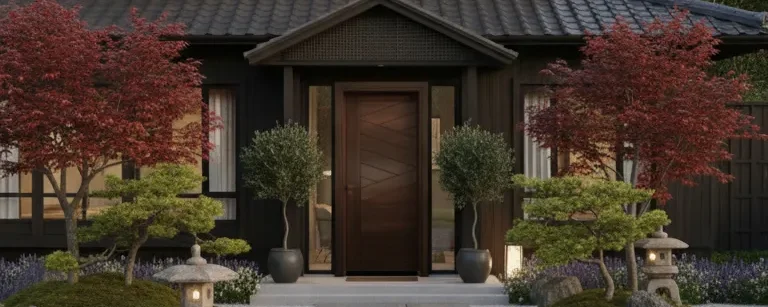
Which sun protection door is better? A practical guide for choosing the right door for the outdoor space
The choice of sun protection door when it is going to be exposed to direct sunlight and temperature changes depends on the right combination of material, surface coating and structural design. Criteria such as the physical resistance of the cover, the coefficient of heat absorption, the distance door leaf to the frame and the quality of the sealing strips determine to what extent a door remains stable against UV and seasonal changes. As a door manufacturer, Rasta Choob offers models with UV-resistant coatings and multi-layer construction to meet the needs of exterior projects.
Key factors that determine sun stability
The material of the top plays the first role in determining the resistance to ultraviolet radiation; Aluminum anodized finishes and varnishes protected with a UV filter provide maximum surface durability. The internal structure includes an insulating core such as polyurethane or reinforced steel sheet, in addition to maintaining dimensional stability, it prevents heat transfer. The thickness of the steel sheet above 1.5 mm is recommended in cases where mechanical resistance and anti-fracture are required. Heat and moisture resistant sealing tapes also prevent water penetration and reflected radiation and increase the life of fittings.
Comparison of materials for sun protection doors
| material | Benefits against the sun | Disadvantages | Approximate life | maintenance level |
|---|---|---|---|---|
| UPVC (U PVC) | Good thermal and sound insulation, high surface resistance to UV in quality types | Plastic look for some tastes, susceptible to fading in cheap models | 10–20 year if high quality | low Simple cleaning and checking tapes |
| Aluminum thermal break | Slim frames with very good thermal insulation, UV-resistant anodized or powder coating | Higher cost than UPVC, need to choose the right cover | 15–25 years with proper coverage | average; Revise the cover and screws |
| iron | Excellent mechanical strength and versatile design | Poor thermal insulation, requiring periodic painting to prevent rust | 20+ years with regular maintenance | a lot; Paint and rust prevention |
| Wood | Natural beauty and feeling of warmth, ability to repair and replace the coating | sensitivity to moisture and direct radiation; Need for frequent protective coating | 5–15 year depending on coating and climate | very much Regular lubrication and coating |
| Suggestion: For hot and dry climates, thermalbrick aluminum or UPVC with UV coating is a better choice; For high security, iron with a modern protective coating is suitable, and wood is recommended for indoor or semi-covered spaces. | ||||
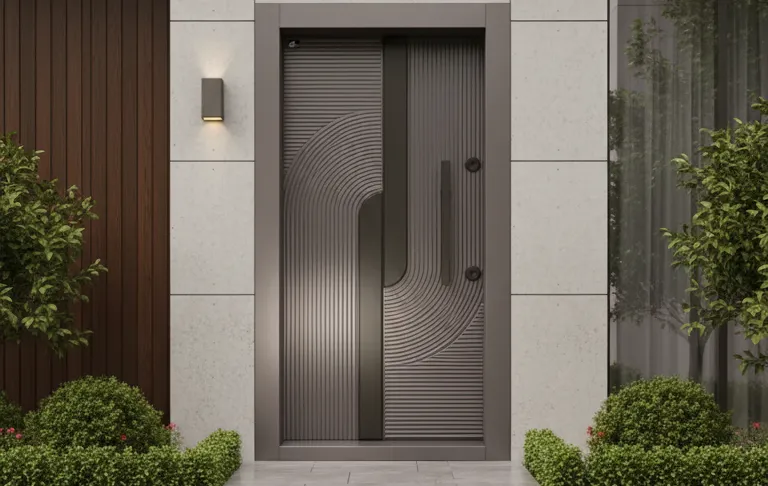
Technical characteristics of sun protection doors Rasta Choob
Rasta Choob has designed exclusive models for outdoor spaces that have a combination of an insulated core and a UV-resistant coating. One of the noteworthy models, FBR01, is designed for wet and sensitive spaces and its thickness door leaf is reported between 4.5 and 5 cm. The standard height of these products is 210 cm and waterproof foamed frames are available in three diameters 9, 13 and 17 cm to enable installation on different walls.
The use of moisture-resistant sealing tape in the design of FBR01 helps to reduce water penetration and protect the edges, and sound and thermal insulation properties are also included in this model. For projects that require resistance to impact and sunlight at the same time, the combination of steel sheet with appropriate thickness and polyurethane core will be efficient.
Detailed installation steps and tools for long-term performance
Accurate measurement with a laser meter and level check with a plumb line are the first critical steps; The error in this step increases the depreciation and decreases the thermal performance. Fixing the frame requires a concrete drill and stainless steel roll bolts with a suitable diameter so that the position is not changed by continuous opening and closing. To install door leaf, use corrosion-resistant screws and cement-sand mortar or bolt anchors in weak walls.
After installation, distances should be adjusted and locks and fittings should be installed according to performance standards; Quality control tests include opening/closing several hundred times, thermal insulation test and mechanical connection test. If they have a digital lock, the performance of the sensors and power supply should be checked under different temperature conditions. Rasta Choob offers standard installation services and post-installation quality control packages to ensure durability.

Maintenance, practical life and application recommendation based on climate
Periodic cleaning with lukewarm water and non-corrosive detergents preserves the finish and prevents the accumulation of dirt. Checking and replacing sealing tapes every 1–3 year, depending on radiation and precipitation, prevents the penetration of moisture and the reduction of insulation efficiency. In hot and dry areas like Shiraz, choosing anodized coating or UV-resistant powder paint and using high-quality thermal break aluminum or UPVC will reduce the costs of cooling the building.
For iron doors, it is recommended to review the protective coating every 2–4 year and repaint if needed. Rasta Choob offers climate-friendly offers based on local conditions, and after-sales service and technical advice are available to customers to extend the useful life of products.
suitable sun protection door; An investment for durability, comfort and security
Choosing the ideal entry door for sunny conditions is about more than looks; The right decision is a combination of the right material, UV-resistant coating and careful installation, which reduces repair costs, energy consumption and security risks. First of all, determine the climate and the amount of traffic so that the priorities (thermal resistance, mechanical strength or low maintenance) are clear.
The next step is to ask for technical specifications: the type of UV protective coating, the construction of the insulating core, the quality of the sealing tapes and the standards of the fittings - these components determine the useful life. In practice, coated aluminum or UPVC makes more sense for hot, dry areas, iron for security needs, and wood for semi-enclosed spaces.
Installation with proper tooling and anti-corrosion fittings, and a regular maintenance schedule (flushing and checking of tapes/coatings) will dramatically increase performance life. For a final decision, calculate the combination of initial cost and long-term maintenance cost and ensure quality tests after installation. A good sunroof doesn't just keep the door open; It guarantees peace, economy and protection of your building daily.
How useful was this article?
1 --- 5
Average rating 4.8 / 5. Number of points 495
No points have been registered so far. (be the first)