
Rasta Choob as a manufacturer of all types of internal and external doors, focusing on new technologies including production Waterproof door and vacuum doors, he tries to put his knowledge and practical experience in the mold Vacuum waterproof door training provide Relying on up-to-date equipment and expert team, this collection teaches the process of material selection, preparation, vacuum press and creation of moisture-resistant layers in detail so that the quality and durability of the products, as implemented in the Rasta Choob production line, can also be achieved in other projects. Rasta Choob is a link between wood art and technology; Where beauty, resistance and professional standards come together and are introduced to the user in the form of waterproof and vacuum doors.
- Vacuum waterproof door training: a complete selection guide, technical specifications and implementation tips
- Features and technical specifications of the vacuum waterproof door
- Materials and construction: What materials are used in vacuum doors?
- Advantages and limitations of plywood and vacuum doors
- Buying tips and choosing the right one based on the application
- Installation, sealing and maintenance to increase service life
- Final steps for a sustainable choice in wet environments
Have you hesitated in choosing or installing doors that are truly moisture resistant? This guide is written for those who want to know the difference between vacuum and plywood doors, which materials and technical specifications are suitable for your use, and how proper installation and maintenance lead to real longevity. In the following, the technical features, advantages and limitations, the combination of materials and the implementation points of installation and sealing are stated to make the choice and decision easier.
Special sections are also dedicated to practical ways to find technical and workshop training on vacuum door manufacturing, installation and repair: from specialized workshop courses and training videos to manufacturers' technical resources and downloadable installation checklists. If you need guidance on determining the type of core, choosing a cladding or using aluminum profiles, this article provides practical solutions and tips that can be used in residential and industrial projects.

Vacuum waterproof door training: a complete selection guide, technical specifications and implementation tips
concept Vacuum waterproof door training It includes an understanding of the construction, materials, and installation and maintenance points that the buyer or installer must know to ensure long-term performance and true moisture resistance. In this article, the technical characteristics, advantages and disadvantages of vacuum and plywood doors, selection criteria based on application and practical solutions for installation and maintenance are explained in a step-by-step manner to make the purchase decision easier.
As a manufacturer of all types of doors, Rasta Choob has compiled this guide for customers who need durability and resistance in wet conditions. The technical and practical information provided is based on the specifications of common materials such as PVC, plywood, foamed cores and aluminum profiles to give a clear picture of the options available.
Features and technical specifications of the vacuum waterproof door
Vacuum sealed doors usually have layers of PVC or fiberglass that prevent water and vapor penetration and minimize deformation in wet conditions. Many examples are thermal and sound insulation and provide better insulation performance with foamed or polystyrene cores; This property is especially important in spaces such as bathrooms and hospitals.
Some models are produced with fire-resistant materials and have self-extinguishing or flame resistance properties that reduce the risk of fire spreading. Vacuum and plywood doors are resistant to the attack of termites and other wood-eating insects, and for this reason, they are suitable for environments where heat and humidity cause the deterioration of natural wood. From the point of view of hygiene, the non-porous surface and antibacterial properties of some coatings make it possible to use them in sensitive places such as hospitals and industrial kitchens.
Materials and construction: What materials are used in vacuum doors?
The combination of materials in the production of vacuum doors plays a decisive role in performance and durability; Moisture-resistant HDF cores or polyurethane foams are commonly used along with PVC or ABS cladding. Polywood or wood plastic is a type of composite that consists of wood waste and PVC and is widely used to produce door leaf that are supposed to be in constant contact with steam or moisture.
Aluminum profiles in the frame or edges help to strengthen the structure and prevent warping and are recommended in exterior models or doors that are exposed to rain. Intermediate layers can include fiberglass reinforcements or polypropylene meshes to increase mechanical strength and dimensional stability. Reputable manufacturers such as Rasta Choob usually select raw materials based on moisture resistance standards and mechanical tests and quality control to ensure the declared specifications.
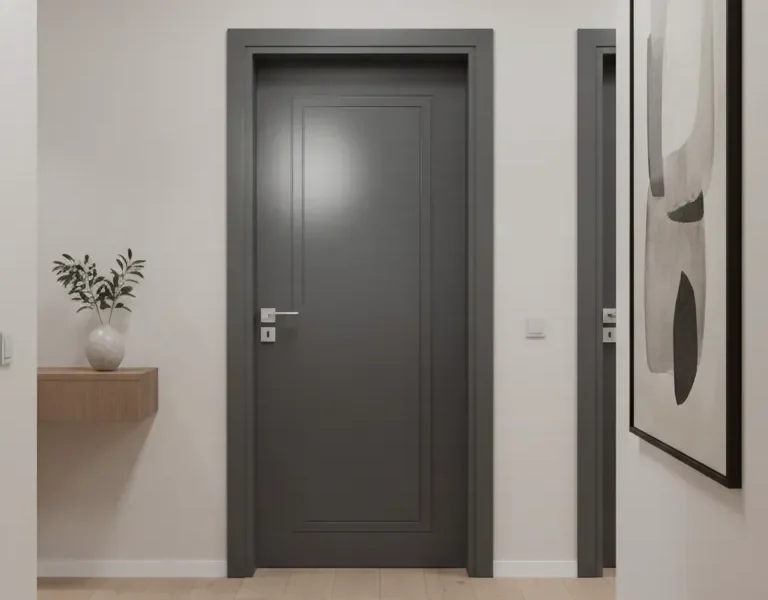
Advantages and limitations of plywood and vacuum doors
The main advantage of vacuum waterproof doors is practical resistance to moisture penetration and non-deformation in wet environments, which reduces repair and replacement costs. These doors can be washed with mild detergents and do not require expensive refinishing or staining like natural wood, which is an important advantage for places that require frequent cleaning.
From an environmental point of view, the use of recycled materials and polymers in some samples reduces the consumption of natural wood, and this feature makes them more environmentally friendly. At the same time, there are disadvantages; The artificial appearance of some models may not be compatible with the taste of traditional spaces, and when exposed to direct sunlight, some coatings experience color change or surface failure. The precise production and cutting of some samples is time-consuming and requires special CNC machines, so limitations on custom sizes or delivery times may occur.
Buying tips and choosing the right one based on the application
Before ordering, you must specify the use of the door: bathroom or toilet door, kitchen door, exterior door, or medicine door, each has different priorities; For example, the foamed core and PVC coating is suitable for the bathroom, but for outdoor spaces, it is better to use fiberglass or aluminum profile. In choosing the material, pay attention to the durability of the cover, repairability in case of damage, and antibacterial properties, because these factors determine the actual life span and daily maintenance.
Measure and specify the exact dimensions of the opening, door leaf thickness, lock and pivot type and edge sealing options before ordering, so that installation can be done without problems. If you're looking for high-end customization, a CNC design, or a special color, use a manufacturer that offers advanced design and cutting services; Rasta Choob provides the possibility of ordering CNC designs and providing technical advice for choosing the most suitable combination of materials. Also ensure warranty and after sales service as technical support ensures quality performance.

Installation, sealing and maintenance to increase service life
Correct installation plays a central role in the performance of the waterproof door; The alignment of the frame, the use of suitable screws and roll plates to support the weight and prevent local pressure on the door leaf and the placement of sealing strips in the points of contact with steam are vital points. The edges and joints must be sealed with resin or special adhesives to block the steam penetration paths and prevent the coating from swelling or separating.
It is recommended to use aluminum thresholds or waterproof strips for the doors of wet spaces to eliminate direct contact with water and provide drainage. For daily maintenance, avoid strong acid and abrasive detergents and instead use warm water and mild detergent or PVC standard solutions so that the coating is not damaged.
In case of surface scratches, it is usually possible to repair with special kits or replace surface panels; Maintenance of handles and hinges with periodic lubrication prevents jamming and abnormal pressure increase. A quarterly visit to check the seams, screws and cover condition and notify the manufacturer of any abnormality will help prevent extensive breakdowns, and reputable manufacturing companies such as Rasta Choob provide after-sales service and installation guidance for customers.
Final steps for a sustainable choice in wet environments
In a general view, the true value of choosing the right door is determined when the correct combination of materials, technical specifications and precise installation are coordinated; What you need is a choice that not only looks good, but also provides durability, ease of maintenance and practical moisture protection. To turn technical information into an executive decision, some clear and practical actions are suggested: first, finalize accurate measurements and determine the type of user (internal, external, service); Then closely examine the cover and core samples and measure their resistance to steam and direct contact.
Ask the manufacturer for the installation and warranty checklist and specify the details of the profiles and sealing strips before cutting or ordering. Set up a simple maintenance schedule including seasonal inspection, gentle cleaning, and bearing lubrication to extend useful life.
By following these steps, your choice will not only be a beautiful door, but also a practical investment to reduce repair costs and increase the health and safety of the space. In other words, a properly installed watertight door and vacuum door will ensure the long-term comfort and efficiency of the space.
How useful was this article?
1 --- 5
Average rating 4.8 / 5. Number of points 462
No points have been registered so far. (be the first)