
Types of waterproof doors Rasta Choob products with beautiful design, high durability and premium quality are a professional response to the needs of wet spaces such as bathrooms and toilets. At Rasta Choob, we use modern technology and materials such as PVC and ABS. Waterproof door We produce it in such a way that it is completely resistant to steam, water and temperature changes and remains for years without deformation or decay. The variety of models and colors of Rasta Choob products allows you to have a beautiful and durable choice for any style of decoration. If you are looking for a combination of quality, beauty and durability, Rasta Choob is a smart choice.
- A comprehensive guide to buying and knowing the types of waterproof doors: the right choice for wet spaces
- Getting to know the main types of waterproof doors
- Technical specifications and advantages of ABS waterproof door
- The production process of waterproof doors in Rasta Choob: from the frame to the final press
- Dimensions, fittings and additional parts: what options can be ordered?
- Applications, installation and maintenance tips in wet areas
- Buying guide from Rasta Choob: Tips to know before ordering
- The final step for choosing a waterproof door: a practical and sustainable decision
When moisture gradually erodes layers of wood and veneer, choosing the right door for a bathroom or wet space can be the difference between frequent replacements and long-term peace of mind. This article is a clear and practical guide for those who seek knowledge and comparison when searching Types of waterproof doors are and want to make an informed decision between ABS, Polywood and PVC. Instead of scattered and confusing technical information, this text examines the practical features of each group in plain language: from moisture and impact resistance to weight, installation and maintenance.
Also, what you need to know before ordering, accurate measurements, selection of core and frame types, and delivery time and cost—are presented in a concise and helpful manner. If you have a residential or commercial project and want to choose a durable option with a harmonious appearance, reading further will help you weigh the advantages and limitations of each material and choose Rasta Choob products with confidence. Be with us to have a stable and suitable choice for wet spaces.

A comprehensive guide to buying and knowing the types of waterproof doors: the right choice for wet spaces
In this article, we discuss the categories, technical specifications and important points of choosing the right doors for the bathroom, toilet and toilet spaces, so that you can choose a durable and beautiful option with full knowledge of Rasta Choob products. The main focus is on common materials such as ABS, Polywood and PVC so that the differences and benefits in practice are clear to the buyer.
Getting to know the main types of waterproof doors
The three common families in the market include ABS waterproof door, Polywood waterproof door and PVC waterproof door, each of which has its own structure and advantages. ABS doors have a surface made of acrylonitrile butadiene styrene, which is resistant to moisture and light; Polywood doors are often made of integrated composite with high resistance to the growth of fungi and insects and are suitable for environments with low flammability; PVC or foamed doors are made of compressed PVC and meshed cores that ensure a high percentage of waterproofing. As a manufacturer, Rasta Choob offers all three options with different dimensions and finishes to meet the needs of residential and commercial projects.
Technical specifications and advantages of ABS waterproof door
ABS waterproof doors have distinctive features such as scratch resistance, washability with common detergents, impact resistance, and sound and thermal insulation are acceptable. The thickness of ABS coating is usually between 1 to 1.2 mm and the total thickness door leaf ranges from 3.5 to 4.5 cm, which provides light weight and easy installation. Rasta Choob uses high-quality sheets and the possibility of using high-quality recycled materials in the production of ABS models, and offers a quality guarantee and warranty for many models so that the buyer can choose more confidently.
The production process of waterproof doors in Rasta Choob: from the frame to the final press
Rasta Choob watertight door production starts with a wooden frame structure and is followed by a chipboard reinforced grid or internal honeycomb cores to increase rigidity and stability. Both sides of the door are usually covered with chipboard or MDF, and in foamed models, the compact PVC core is meshed to maintain watertight integrity.
In the final stage, the assembly is placed under the press machine so that the ABS coating or the foamed layer is completely attached to the body and the continuity necessary to resist steam and water splashes is created. This production chain in Rasta Choob is designed in such a way that it is possible to produce in custom sizes and provide various color coatings.
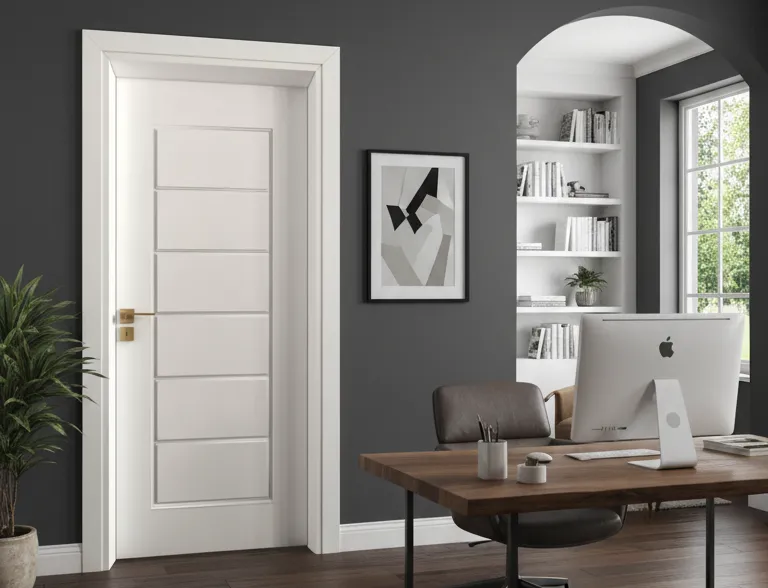
Dimensions, fittings and additional parts: what options can be ordered?
Standard production dimensions often include widths of 62 to 82 cm and typical heights of 210 cm, but Rasta Choob also allows for custom production in non-standard sizes. The thickness of door leafs is usually between 4.5 and 5 cm, and the foamed waterproof frames are available in 9, 13 and 17 cm diameters to accommodate different wall thicknesses.
It is recommended to install EPDM or silicone sealing tape to prevent moisture infiltration and reduce passing noise, and it is possible to order a cornice and waterproof architraves to match the color of the door for a unified beauty.
Applications, installation and maintenance tips in wet areas
Waterproof doors are mainly suitable for toilets, bathrooms, kitchens and spaces near swimming pools or saunas, and are widely used in the northern and southern regions of the country where the humidity is high. During installation, it is recommended to keep the distance of the bottom of the door to the floor to a standard level to establish proper air flow and ventilation and to prevent moisture from getting stuck in the bottom edges.
For daily maintenance, washing with soap and water or mild detergents is sufficient; Avoid strong solvent solutions and harsh tools for cleaning so as not to damage the coating. For long-term protection, periodic inspection of sealing strips and lubrication of hinges is recommended every six months.

Buying guide from Rasta Choob: Tips to know before ordering
Before ordering from Rasta Choob, first carefully measure the dimensions of the opening and the type of frame available to choose the right model. Determine if you need an integrated waterproof frame or if you plan to install frameless door leaf over the old frame; Both options are supported by Rasta Choob. Choose the color and design of the cover, the type of core (honeycomb, MDF or resin) and the type of sealing tape based on the level of humidity and taste.
Normal delivery time for foamed and PVC products is between 18 and 22 business days, and shipping and installation costs are usually the buyer's responsibility; Rasta Choob offers quality warranty and after-sales service for many models. If you need technical advice, the Rasta Choob technical team can provide customized proposals based on the space plan to ensure functionality and beauty together.
The final step for choosing a waterproof door: a practical and sustainable decision
Choosing the right waterproof door means putting together some simple but decisive criteria: humidity level, daily traffic, exact opening size and appearance preferences. First, measure carefully and determine the needs—whether the goal is absolute water resistance (PVC/Foamized), weight and ease of installation (ABS), or greater durability and pest and impact resistance (plywood). Then choose the appropriate frame and type of sealing tape and estimate the delivery time and warranty conditions.
At the installation stage, observe the standard distance from the floor to door leaf and proper ventilation to increase the service life of the door. For maintenance, washing with a mild detergent and periodically checking hinges and sealing tape every six months is the easiest way to avoid early replacement costs. If you hesitate to make a decision, sending a plan or contacting the technical team can provide operational and customized suggestions. A final reminder: In wet spaces, the smart choice is made once and brings years of comfort and peace of mind.
How useful was this article?
1 --- 5
Average rating 4.9 / 5. Number of points 461
No points have been registered so far. (be the first)