
The difference between vacuum and waterproof doors PVC is specified in the material, the manufacturing method and the degree of resistance to moisture and water. Waterproof vacuum doors are made with MDF or HDF frame and vacuumed top with PVC layer or resistant materials to have a unified, beautiful and completely waterproof surface. Waterproof door Besides high resistance, Rasta Choob offer a modern and durable look.
- The difference between vacuum and PVC waterproof doors: a practical guide to choosing in wet spaces
- Materials and construction: How are vacuum and PVC different?
- Resistance to moisture, steam and direct contact with water
- Functional and technical comparison (comparison table)
- Suggested uses and selection scenarios
- Technical tips, installation and maintenance to increase useful life
- Why buying from the manufacturer is important and the role of Rasta Choob
- The Ultimate Guide to Door Selection for Wet Environments: Performance, Durability and Practical Steps
in contrast, Waterproof door PVC Manufactured entirely from durable plastic, they are lightweight, low-maintenance, and suitable for wet environments, but may have limitations in terms of design and strength compared to vacuum doors.
Rasta Choob, a manufacturer of all kinds of doors, with experience and high-quality materials, offers a series of vacuum and waterproof PVC doors for houses and apartments. Rasta Choob products are remarkable both in terms of beauty and modern design, and they have high durability and longevity.
By choosing Rasta Choob waterproof doors, you will not only have high quality and resistance, but you will also create a beautiful and moisture-resistant space. If you are looking for a safe purchase and a product with today's standards, Rasta Choob is the best choice for you.
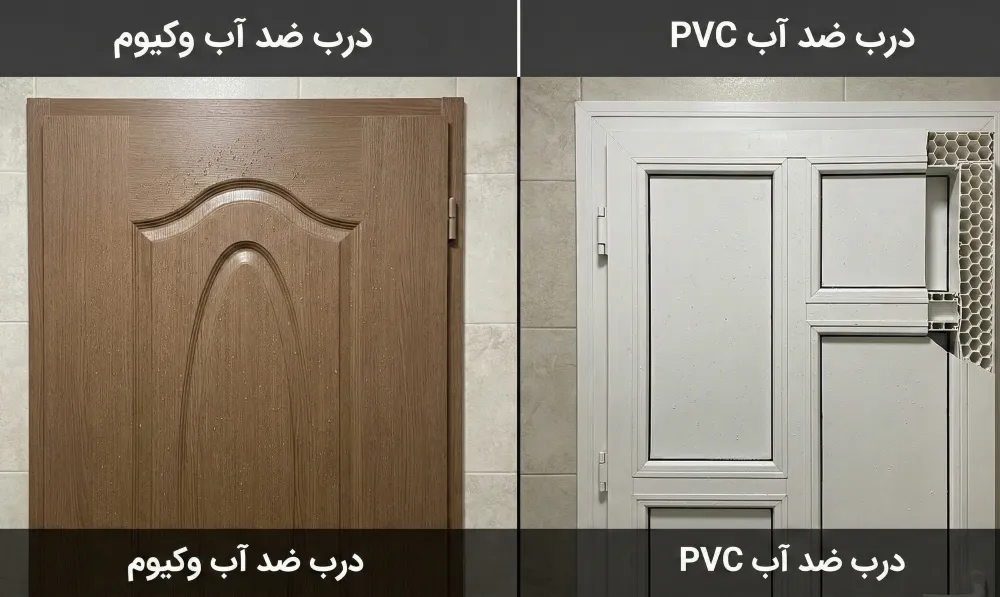
The difference between vacuum and waterproof doors PVC: A practical guide to choosing in wet spaces
The reason for choosing the right door for bathroom, service and wet spaces often depends on the accurate understanding of the structural and functional differences between vacuum and PVC samples; In this text, we will discuss the features and limitations of both types in a practical way and according to the experience of domestic manufacturers such as Rasta Choob so that your decision is based on real needs.
Materials and construction: How are vacuum and PVC different?
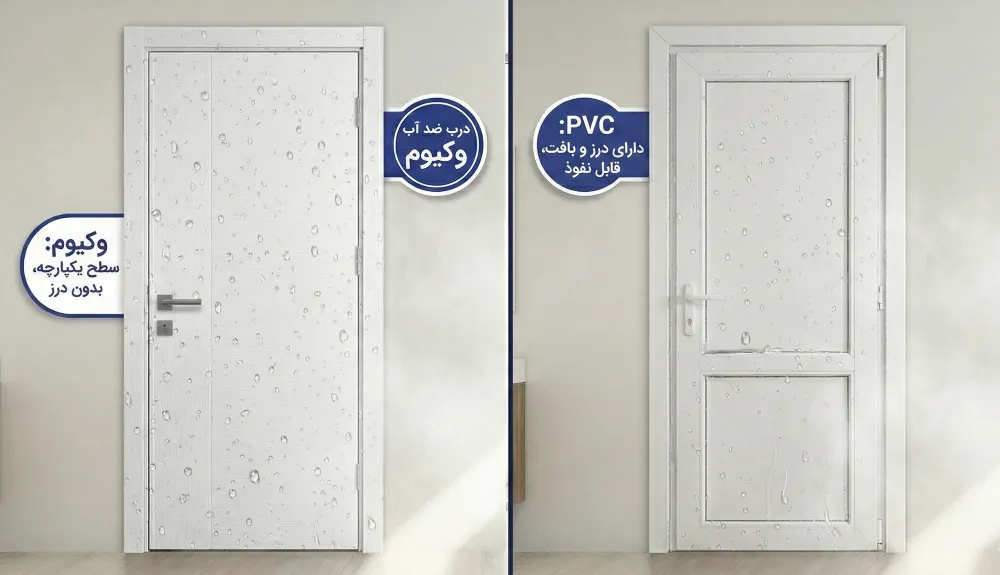
Vacuum doors are usually made of a core such as MDF or foamed core with a PVC coating or PVC film under a vacuum press process, which causes the coating to adhere seamlessly to the surface, and as a result, the joints that are the place of moisture penetration are eliminated. In contrast, PVC doors often consist of plastic profiles or PVC sheets on light cores, and depending on the type of production, it is possible to use different additives in the structure. The key feature of the vacuum door is the lip-like and integral connection of the cover to the edges, which reduces the risk of core swelling, while PVC doors are designed more on the basis of surface reinforcement and lightening.
Resistance to moisture, steam and direct contact with water
In environments with permanent steam and direct water spraying, such as bathrooms and swimming pools, vacuum doors with sealed edges and integrated coating show better performance in preventing moisture from penetrating the inner tissue and reducing the risk of swelling or detachment of the coating. In situations where water contact is limited or intermittent, properly coated PVC doors also provide acceptable performance and are faster to install due to their lower weight. Long-term moisture resistance depends on the quality of the adhesive and pressing technology, the type of core and the sealing of the frame; Therefore, it is very important to pay attention to the manufacturer's technical specifications and warranty.
Functional and technical comparison (comparison table)
| Feature | vacuum door | PVC door |
|---|---|---|
| Surface structure | Integrated vacuum coating, no visible seams | Surface PVC sheet or profile that may have corners with seams |
| Resistance to water penetration | High due to vacuum press and sealed edges | Good against splashes but less so against continuous water |
| Weight and installation | Medium to heavy depending on the core (MDF or foam) | Lightweight and quick installation |
| Thermal and sound insulation | depends on the core; Solid cores or foamed better insulation | conventional insulation; Need to add additional layers for audio |
| Resistance to sunlight | Depending on the quality of the coating; Some samples are sensitive to direct radiation | Polymers with more UV resistant additives are available |
| Maintenance and washing | Smooth and seamless surface, easy to clean with a damp cloth | Easy to wash, but the seams need more care |
| Environment and health | Depending on the materials used in the layers; Manufacturers can use less polluting compounds | Regular PVC may contain harmful additives; Standardized samples are better |
| The final choice depends on installation location, budget, and sustainability and installation priorities; Manufacturers like Rasta Choob can set the specifications for your project. | ||
Suggested uses and selection scenarios
For home bathrooms with regular spraying, vacuum or foamed doors that have a water-resistant core are the preferred choice because the possibility of warping and separation of the coating is very low. In spaces such as utility rooms, economical and lightweight PVC doors can meet functional needs provided they are out of direct water contact. If your project involves installation in areas exposed to the sun, ask the manufacturer to provide samples with UV-resistant coatings or protective additives. Rasta Choob, as a manufacturer of all types of doors, offers examples of both groups with the possibility of customization for different uses.
Technical tips, installation and maintenance to increase useful life
Accurately measuring the frame and determining the proper distance from the floor is one of the first steps to prevent water from accumulating on the lower edge of the door, and a mistake in this step leads to the need for cutting and repair. The use of polywood or foamed frames and the installation of moisture-resistant sealing tapes on the edges prevents steam penetration and doubles the lifespan. For maintenance, washing with lukewarm water and a soft cloth regularly and checking the fittings and hinges annually is enough; Avoid corrosive detergents and rough brushes so as not to damage the coating. If you are looking for quality assurance and long-term service, buying directly from a manufacturer that offers warranty and after-sales service is a smart decision.

Why buying from the manufacturer is important and the role of Rasta Choob
Buying directly from the manufacturer provides better quality control and allows you to order the desired size and finish without expensive intermediaries; As a manufacturer of all kinds of doors, Rasta Choob provides the possibility of providing a technical catalog, adjusting the thickness of the core, choosing foamed or plywood frames and periodical warranty. Custom ordering from the manufacturer allows technical specifications such as door leaf thickness, coating type, and sealing details to be confirmed prior to final production so that the product is made to meet your climate and project requirements. For moisture-sensitive projects or requiring a long-term warranty, direct contact with the manufacturer's manufacturing and after-sales service unit is a safer choice.
The Ultimate Guide to Door Selection for Wet Environments: Performance, Durability and Practical Steps
In a nutshell: If you have constant contact with water or steam, the waterproof vacuum lid is a more logical choice due to its integrated coating and sealed edges; If the goal is to simplify, fast installation and lower cost, and water contact is limited, PVC door can cover your need. Now, to turn this choice into a practical result, take some concrete steps.
- Measure the amount and type of contact with water and sunlight (bathroom, poolside, light-emitting spaces).
– Compare the actual budget with the long-term cost of installation and maintenance, not just the initial price.
- Ask the manufacturer or seller for the technical and warranty catalog and confirm the details of the core, adhesive and sealing method.
- In the installation, use the appropriate frame and sealing tapes and observe the distance from the floor.
Define a simple maintenance schedule: gentle washing, hinge checks and yearly sealing.
By following these steps, your choice will become a practical investment: the right door not only preserves the look and function of the space, but also reduces repair costs and wasted time for years — the door, a foolproof safeguard for your home's comfort.
How useful was this article?
1 --- 5
Average rating 4.9 / 5. Number of points 358
No points have been registered so far. (be the first)