
What kind of waterproof vacuum door? will it be made Waterproof door Rasta Choob are produced using advanced technology and quality materials to be completely resistant to moisture, water and temperature changes. In this process, first the door frame is made of high-quality MDF or HDF, and then its surface is covered with PVC layers or waterproof materials. The vacuuming step makes the top layer completely adhere to the door, leaving no room for water to penetrate, so the door will be completely waterproof and durable.
- How is a vacuum waterproof door made? Production steps and role Rasta Choob
- Selection and preparation of raw materials
- Engineering design and precise cutting
- Vacuum press, coating and multi-layer coating
- Sealing, installation of fittings and additional parts
- Quality control tests and water penetration tests
- Installation, maintenance and technical tips for longer life
- waterproof vacuum lid; The smart choice for long-term home protection
Rasta Choob, a manufacturer of all kinds of doors, with experience and expertise in making vacuum and waterproof doors, offers a range of high quality products for homes and apartments. Rasta Choob products are not only durable and beautiful, but also easy to maintain and long life.
Have you ever wondered how a delicate Wooden door can withstand the rain? In this short introduction, the technical secrets of making a waterproof vacuum door will be revealed; From the selection of raw materials to sealing details, quality tests and repair tips. Rasta Choob strives to combine the beauty of wood with durability in wet environments with an engineered process, and this article explains the practical manufacturing steps and life extension strategies in a way that is usable for builders, installers and owners. You'll learn why choosing the right core, precision CNC cutting, and the correct vacuum press method determine final performance, and how sealing edges and choosing the right fittings prevent moisture intrusion.
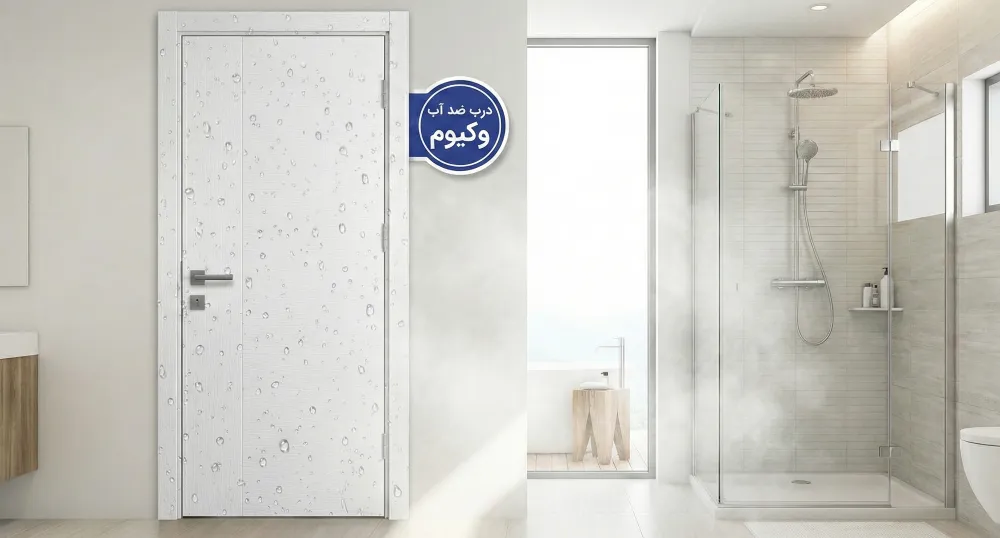
How is a vacuum waterproof door made? Production steps and role Rasta Choob
As a manufacturer of all kinds of doors, Rasta Choob has a regular and engineered process for the production of vacuum waterproof doors, which aims to combine the beauty of wood with resistance to wet environments. In this text, each step from the selection of raw materials to quality tests is explained in technical detail to provide a clear picture of the production process. Emphasizing the practicality of the information makes the reader understand what parameters are controlled at each step and why Rasta Choob is considered a reliable manufacturer.
Selection and preparation of raw materials
First, the basic materials are selected according to the conditions of use; For the internal frame, usually dried Russian wood or finger joint profiles are used to maintain dimensional stability. For the core, common options include honeycomb mesh, high-density pressed MDF, or polyurethane foam core, each with distinct advantages and disadvantages in weight, sound insulation, and impact resistance. Special HDF and MDF sheets with resin coatings or ABS sheets are selected for the top layer to ensure the adhesion of the vacuum coating. Metal materials such as galvanized steel frames or aluminum profiles are used in conditions requiring more stability, and in very humid environments, stainless coatings are used.
Engineering design and precise cutting
The initial design is done considering the coefficient of thermal expansion, the path of water flow and the installation location of the fittings in order to prevent warping and moisture penetration. Cutting parts is usually done with CNC machines and milling with a tolerance of less than 0.5 mm so that the edges and grooves of the connection are accurate. At this stage, the location of the EPDM sealing tape and the water drainage channels are also predicted so that after assembly, access to installation and service is easy. It is important to repair unevenness and homogenize the surface before the pressing process so that the vacuum coating sits flawlessly on the base layer.
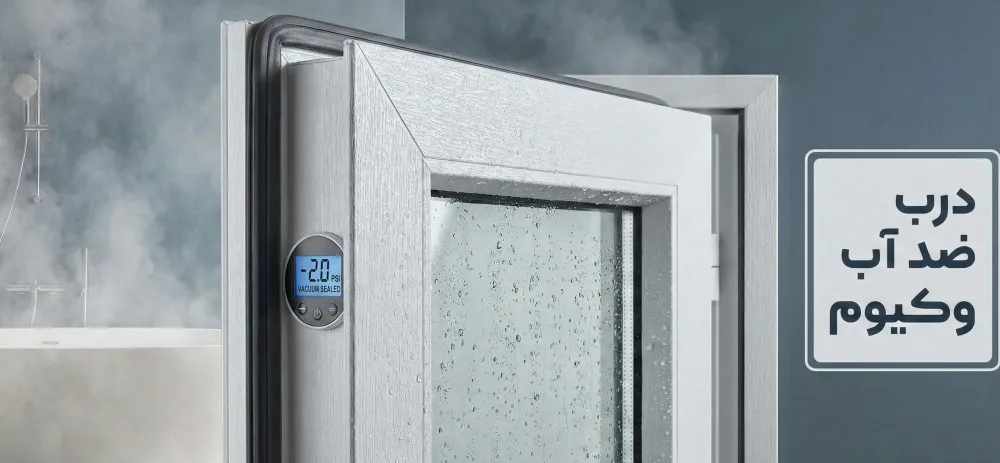
Vacuum press, coating and multi-layer coating
The vacuum forming process involves placing patterned ABS sheet or PVC sheet on the base layer and creating a vacuum to uniformly stick the coating; If needed, special resins based on epoxy or polyurethane are used to increase adhesion and resistance to ultraviolet (UV) rays. At this stage, Rasta Choob uses controlled resins and uniform vacuum pressure as the standard of the production line so that the coatings do not separate at the edges. The coating thickness and how the resins dry are planned so that no tension remains in the layers after opening from the mold. In some models, a layer of compact ABS is applied with a coating of PVC or supermatt coatings to strengthen both the appearance and the surface resistance.
Sealing, installation of fittings and additional parts
The edges and seams are sealed with EPDM tapes or built-in flashings, and silicone or polyurethane adhesives with high adhesion are used to fix any penetration. Selected fittings are 316 grade stainless steel or nickel-chromium plated to ensure lock and hinge longevity in wet conditions. The thickness of the common door leaf is between 4.5 and 5 cm to achieve the desired weight and strength, and at the same time it is possible to install a sealing tape for sound insulation and to prevent the passage of odors. Final assembly includes testing lock placement, adjusting hinges to prevent sagging, and installing plywood frames or galvanized frames.
Quality control tests and water penetration tests
To ensure waterproof performance, samples are subjected to standard tests of localized immersion, water spray under a certain pressure and exposure to a humidity chamber for defined periods of time. In addition to water penetration tests, UV resistance tests, surface impact tests and dimensional stability tests are performed in thermal cycles to identify deformations and delamination. Rasta Choob publishes the results of these tests as part acceptance criteria, and only parts that pass the requirements are moved to the packaging stage. The packaging is also designed based on the transportation standard to ensure the protection of surfaces and edges during transportation and delivery.

Installation, maintenance and technical tips for longer life
For correct installation, the level of the frame must be carefully controlled to prevent stress from door leaf and the sealant, and to ensure the correct placement of the sealing modules during installation. For daily maintenance, it is recommended to clean the surfaces with lukewarm water and mild soap, and do not use abrasive solutions or strong solvents so that the vacuum coating is not damaged.
Preventing stagnant water around the door, periodically inspecting the EPDM strips and replacing corroded fittings are the simplest measures that will increase the useful life of the door. As a manufacturer of all kinds of doors, Rasta Choob provides after-sales service and technical guidance, and provides its customers with a specific warranty and a follow-up service program so that customers' choice for wet environments is stable and reliable.
waterproof vacuum lid; The smart choice for long-term home protection
What you learned in this article is that true moisture resistance is the result of the right combination of materials, engineering precision, and continuous quality control; From choosing the right core to vacuum pressure and precise edge sealing. The practical point is that none of the steps can be ignored: an unstable core or incomplete sealing reduces the overall effectiveness of the vacuum seal, and laboratory checks ensure quality.
Practical steps ahead:
For builders: Specify core specifications, cladding thickness and water penetration test certificates in the contract and standardize CNC parameters and vacuum pressure.
For installers: Carefully control the alignment of the frame and the installation of the EPDM strips to eliminate mechanical stress and penetrations.
For owners: Use cleaning with lukewarm water and mild soap, check the tapes and fittings every six months and replace them if necessary, and prevent the accumulation of stagnant water.
By following these tips, the door that is selected and installed not only preserves the beauty of wood, but also significantly reduces maintenance and repair costs. Finally, an engineered waterproof vacuum door is an investment in the comfort and durability of your living space.
How useful was this article?
1 --- 5
Average rating 4.8 / 5. Number of points 466
No points have been registered so far. (be the first)