
A quality frameless glass door is the result of a combination of precise design, standard material and principled execution; For this reason, pay attention to Executive details of the door Frameless It is of special importance. Many products offered by Door production Frameless They are designed based on specific technical standards to have good safety and performance in addition to beauty. This guide provides practical information on profile selection, glass type, fittings and performance requirements so that designers, contractors and operators can more confidently manage the installation and operation process.
- Frameless Door Executive Details: Technical Guide for Design and Implementation
- Profiles, sections and materials of glass in Frameless design
- Dedicated fittings and fittings for Frameless door
- Step-by-step installation methods, seams and implementation tips
- Safety, acoustic and thermal requirements in executive specifications
- Maintenance, after sales service and manufacturer's role in performance quality
- Practical examples, quality control checklist and economic tips
- How to guarantee the delivery of the Frameless door project with the least risk
In the following, you will learn how the load capacity of patch fitting, sealing methods and installation details should be determined according to the type of use and what solutions are there to increase safety, improve sound and thermal insulation and prevent water penetration. Also important points that every Frameless door manufacturer In the design and manufacture of its products, it is reviewed and quality control checklists are introduced before ordering and installation. Whether you are looking for technical drawings, implementation details, or detailed installation instructions, this manual can be a trusted reference to reduce operational errors and increase the lifespan of Frameless systems.
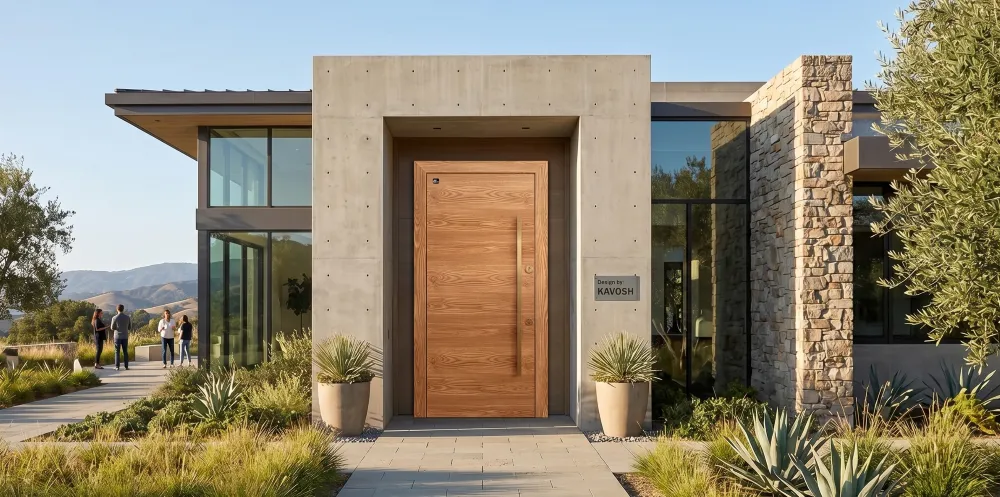
Frameless Door Executive Details: Technical Guide for Design and Implementation
In this section Executive details of the door Frameless It is explained in a technical and practical way so that designers, contractors and manufacturers have an unambiguous implementation path. Choosing the right sections, type of glass and how to connect the parts can guarantee the efficiency and beauty of the Frameless door; Therefore, before any action, project specifications including width, height, wind load of the area and space usage should be recorded. For example, in high-traffic office projects, it is recommended to use laminated glass with a thickness of at least 10 mm per layer to increase impact resistance and post-break behavior.
Profiles, sections and materials of glass in Frameless design
Anodized or anodized aluminum profiles with a polished surface are the most common choice for keeping glass in the Frameless system; These sections should have special EPDM rubber grooves and a drainage chamber to direct the infiltrated water. Recommended glass thickness ranges from 10 to 12 mm for normal applications and up to 15 mm for long spans and heavy loading. Toughened glass for impact resistance and laminated glass to maintain the protective effect after breaking is a common combination, and in doors with higher security, it is common to use outer laminate and inner toughened glass.
Dedicated fittings and fittings for Frameless door
Frameless fittings include patch fittings, concealed hinges, top door jaws and special sleepers that must withstand static and dynamic loads. Steel patch fittings with M10 screws and adjusting wedges typically support loads up to 1500 kg; When choosing, it is necessary to match the load capacity and the conditions of use with the manufacturer of the fittings. The use of EPDM gaskets with controlled hardness creates a reliable seal, and the correct installation of the hydraulic floor has a direct effect on the way it opens and closes and the useful life of the system.
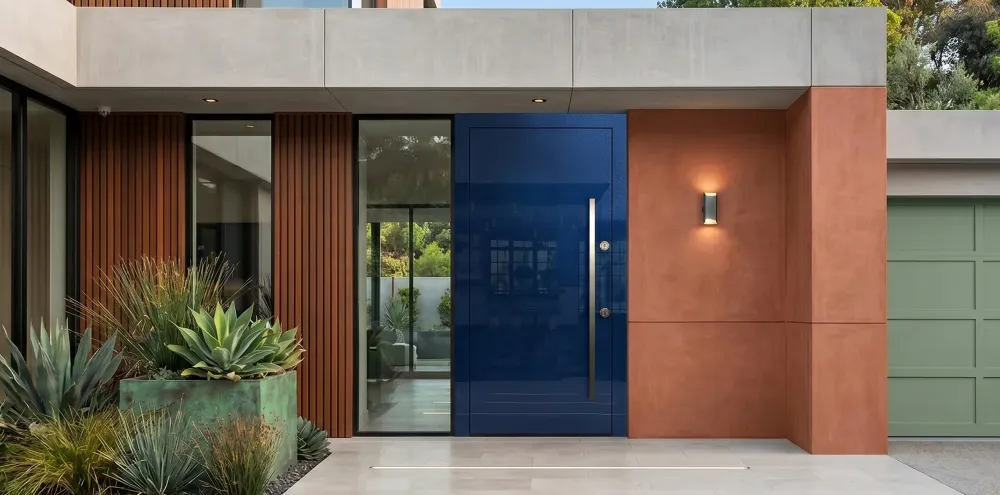
Step-by-step installation methods, seams and implementation tips
The installation of the Frameless door should be done based on a step-by-step protocol: accurate measurements in three heights, installation of connection points according to the execution plan, installation of temporary supports and then mounting of the glass respecting the lateral distances. The minimum distance between the edge of the glass and the building in the Frameless system is usually set to 3 to 5 mm to allow expansion and movement. For sealing, use structured silicone glue or polyurethane with UV resistance, and the thickness of the silicone layer in horizontal areas should not be less than 6 mm to prevent water penetration. In outdoor installations, having a drainage slope of at least 1 to 2 percent in the floor or drainage chambers prevents water accumulation and profile corrosion.
Safety, acoustic and thermal requirements in executive specifications
in design Executive details of the door Frameless The requirements of impact resistance, sound transmission and heat penetration should be taken into account. To increase sound insulation, you can use double-glazed glass or laminated glass with different layers of PVB material, which provides useful sound reduction up to 30–40 decibels. To improve thermal resistance, it is effective to install a profile with thermal break or use Low-E glass in the Frameless system; These methods reduce heat flow and reduce energy consumption. In projects that are required by local building standards or insurance, the installation of laminated glass with specified specifications and conducting sampling tests before installation should be mentioned in the contract.
Maintenance, after sales service and manufacturer's role in performance quality
Adhering to a periodic maintenance schedule is necessary to ensure the performance of the Frameless door; Annual inspection of fittings, replacement of worn gaskets and inspection of possible leaks are key. As a manufacturer of all kinds of doors, Rasta Choob is responsible for providing detailed execution drawings, installation training to the contractor and providing standard spare parts; Customers can request installation instructions and service schedules from Rasta Choob. Rasta Choob also provides examples of implemented projects to engineers to check the compliance of implementation details with actual site conditions.

Practical examples, quality control checklist and economic tips
In a sample project in Tehran, where Rasta Choob was the manufacturer and supplier of Frameless doors, the use of 12 millimeter laminated glass and patch fitting steel reduced vulnerability in heavy traffic; This experience shows that matching technical specifications with actual loading provides the most economical option. Prior to the final order, preparation of a quality control checklist including opening measurements, silicone drying test, floor performance test, and joint belt inspection will reduce the risk of return work. To calculate the final cost, the dimensions of the glass, the type of fittings, the amount of cutting and the cost of the installation service should be separated, and in the case of custom orders, Rasta Choob can offer competitive prices with quality assurance.
How to guarantee the delivery of the Frameless door project with the least risk
The core of the work is to see engineering design, profile and glass selection and installation quality control as a coherent process; When each step is based on technical specifications and practical tests, implementation risks are significantly reduced. Suggested action steps: Before ordering, record wind loading and usage, determine thickness and type of glass (e.g. laminated glass for safety), match patchfitting and floor capacity with manufacturer, and bring execution drawings as contractual requirements.
Running a mock-up or sample installation on site, leak and performance tests of fittings and pre-installation visits will eliminate costly errors. After installation, schedule a periodic maintenance schedule including checking gaskets, hydraulic adjustments, and drain checks. These methods not only increase the life and safety of the Frameless door, but also maintain the acoustic and thermal performance. Regular execution of technical details makes the difference between a beautiful door and a stable and reliable system — a careful choice today is an investment in tomorrow's quality.
How useful was this article?
1 --- 5
Average rating 4.8 / 5. Number of points 422
No points have been registered so far. (be the first)