
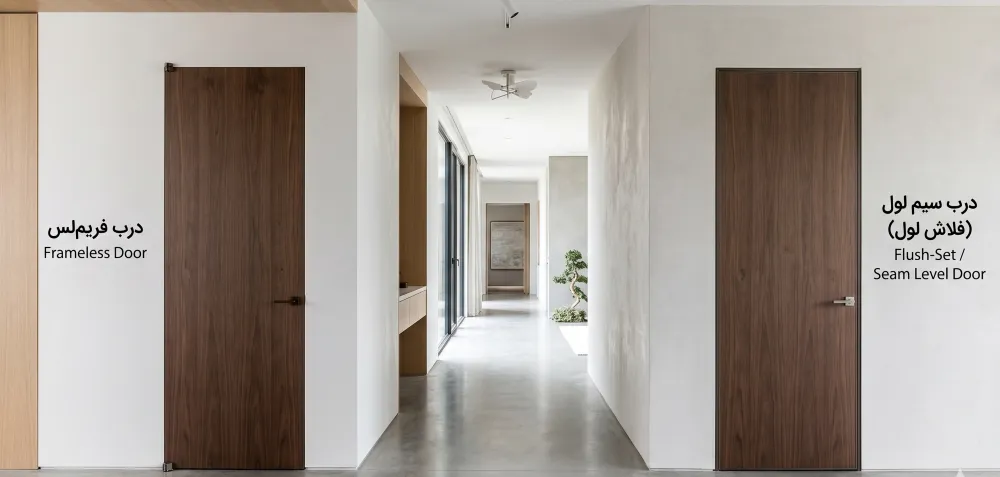
The difference between the door Frameless and the level wire In the design, the way of implementation and the level of their integration with the interior space of the building is determined; The frameless door creates a modern and minimal look by removing the visible frames, while the wire door is designed completely flush with the wall and gives a uniform and hidden effect to the space. Door production Frameless By using high-quality material and modern technology, it tries to implement these differences at the highest level of performance standard.
- The difference between a Frameless door and a wire door: a comprehensive guide to choosing the right door
- Technical structure and building materials
- Operational advantages and disadvantages of both systems
- Design, beauty and visual impact in space
- Installation, maintenance and long-term costs
- Practical comparison: table of differences and manufacturer's offer
- Implementation tips and actual production examples
- How the choice of the door determines the identity of the space
Frameless door manufacturer It plays an important role in providing modern and customized products and according to the needs of architects and interior designers, it produces all kinds of frameless doors in different designs and dimensions. Focusing on the quality of construction, high durability and minimal design, these manufacturers are trying to provide a product that meets luxury and modern projects both in terms of beauty and efficiency.
Deciding on the type of door can dramatically change the look and function of a space: are you looking for smooth lines and visual integrity, or do you prioritize durability and ease of maintenance? If you want to choose between a Frameless door and a wire door, knowing the technical and practical points of each option will help you make a more confident decision. This article specifically to The difference between the door Frameless and the level wire It pays and analyzes from the angles of structure, installation, maintenance, cost and visual impact to suggest the most appropriate solution for residential and commercial projects.
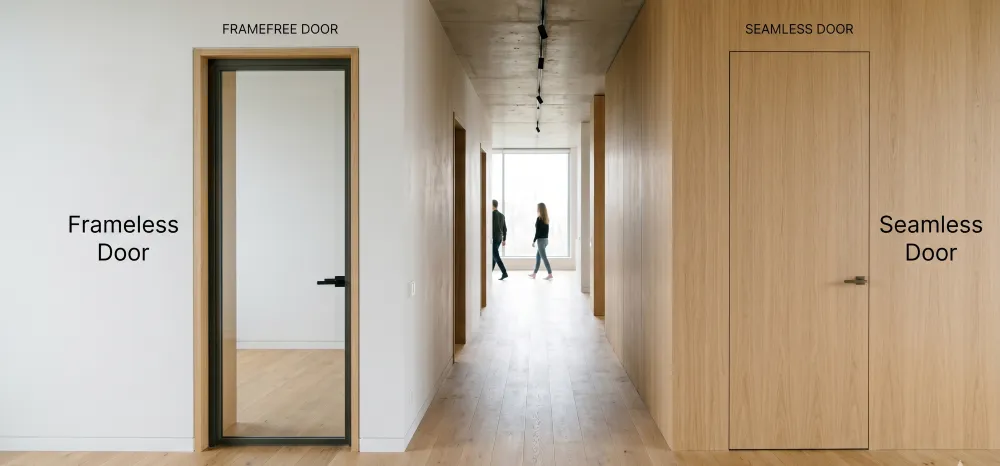
The difference between a Frameless door and a wire door: a comprehensive guide to choosing the right door
In this article, in a technical and practical way to the subject The difference between the door Frameless and the level wire We strive to make a smart choice for residential and commercial projects. The text is designed for architects, contractors, and end buyers, and explains practical, maintenance, and aesthetic considerations with concrete examples. If you're looking for advice on getting a door from a manufacturer like Rasta Choob, this guide will help you identify the right style.
Technical structure and building materials
The door Frameless usually uses a hidden chassis and built-in fittings, and its body can be made of glass, MDF with special finishes or a combination of metal and wood to create a sense of visual integration. In contrast, a wire door uses external or semi-concealed hinges that transfer the mechanical load to the frame and is usually made of solid wood or a specified metal frame. The difference in structure makes the Frameless door distribute the pressure more evenly in the wall, but the wire loop has easier access for repairs and parts replacement. The selection of materials in both types should be done based on the thermal, humidity and sound requirements of the environment in order to increase the lifespan.
Operational advantages and disadvantages of both systems
The Frameless door has obvious advantages, such as a minimalistic appearance, the removal of specific frame strips, and the possibility of installing full-length glass, which makes the space appear larger and more modern. On the other hand, this system requires more precision in the initial installation and adjustment, and in cases where the wall does not have enough structural support, reinforcement may be necessary. A wire-hinged door is more impact-resistant and easier to replace or reset the hinge, but the framed edges may detract from the modern aesthetic. For example, in luxury apartments with minimalist facades, Frameless is a more suitable option; But in high-traffic offices or high-traffic buildings, wire rope offers operational durability and easier maintenance.
Design, beauty and visual impact in space
The choice between Frameless and wireline has a direct impact on the interior design language. The Frameless door allows more light to flow and create smooth visual lines, which is suitable for modern and minimalist spaces, while the hinged wire door with a distinct frame and hinge details can enhance a classic or industrial feel and work more harmoniously in spaces with traditional or rustic decoration. Rasta Choob, as a manufacturer of all kinds of doors, offers customized samples that include a combination of different finishes, matte and glossy colors and carved designs to perfectly match the interior design. Choosing the color of the frame and the type of fittings plays an important role in the final harmony between the door and the wall.
Installation, maintenance and long-term costs
The installation of Frameless door is usually more time-consuming and requires expert personnel because the alignment, hidden hinges and sealing must be done with high precision to increase smooth operation and useful life. Initial setup cost Frameless can be higher due to built-in fittings and surface finish work, but if designed and installed correctly, the need for minor repairs will be reduced. A hinged wire door is faster to install, and it is cost-effective to replace the hinge or repaint it in the future; However, depending on the quality of the material, it may incur a higher maintenance cost in the long run. For actual cost estimation, Rasta Choob provides technical consulting services and project cost estimation, which includes comparison of useful life and maintenance requirements.
Practical comparison: table of differences and manufacturer's offer
| Criterion | Door Frameless | Wire door hinge |
|---|---|---|
| appearance | Smooth, minimalist and integrated lines | Clear frame, classic or industrial look |
| Custom designs | Suitable for all-round glass and modern coatings | The ability to engrave and add decorative views |
| Installation | It requires high precision and expert personnel | Faster and easier installation |
| maintenance | Less if properly installed, but more specialized repair | Easier hinge replacement and repair |
| Sound/heat insulation | High insulation ability by choosing the right materials | It can vary depending on the structure of the frame |
| Initial price | Higher due to built-in fittings and installation accuracy | Usually more economical |
| Application suggestion | Modern spaces, glass interior, luxury projects | High traffic environments, office and traditional buildings |
For the final decision, it is important to pay attention to factors such as daily traffic, design purpose, budget and wall conditions; In many projects, a combination of both styles can be used to maintain both beauty and functionality.

Implementation tips and actual production examples
In projects implemented by reputable manufacturers, including Rasta Choob production units, the choice of hinge type, insulation method and cover quality are recorded and checked as samples to confirm the performance in real conditions. The use of a soft-close hinge in the Frameless prevents impact and increases the life of the fittings, and in the hinge wire, the choice of a stainless steel hinge increases the useful life in humid environments. Application example: In a villa with a glass facade, the installation of the Frameless door together with the reinforced aluminum profile has controlled the wind force and structural loading while maintaining the beauty. Customers can visit Rasta Choob executed samples and get technical advice to match the architectural drawings.
How the choice of the door determines the identity of the space
Deciding between a Frameless door and a wire door when combined with tangible criteria yields an efficient and lasting result; More important than the manufacturer's name is the harmony between functional requirements (traffic, sound/heat insulation) and aesthetic criteria. Your next practical steps can be: First, measure the amount of traffic and expected resistance; Second, check the structure of the wall and the need for reinforcement; Third, try real samples with different finishes and fittings closely; And fourth, get a life cycle cost estimate (installation, maintenance, repairs) from the manufacturer or contractor.
In projects where you want minimalism and light flow, the Frameless door creates added design value; In high-traffic areas or requiring simple repairability, wire door is more practical. As a final step, stipulate specialized installation and parts warranty so that your choice remains stable in practice. Making the right choice isn't just about appearance, which determines the quality of the everyday space experience — the door you open also tells the story of your space.
How useful was this article?
1 --- 5
Average rating 4.8 / 5. Number of points 421
No points have been registered so far. (be the first)